 2 hours ago
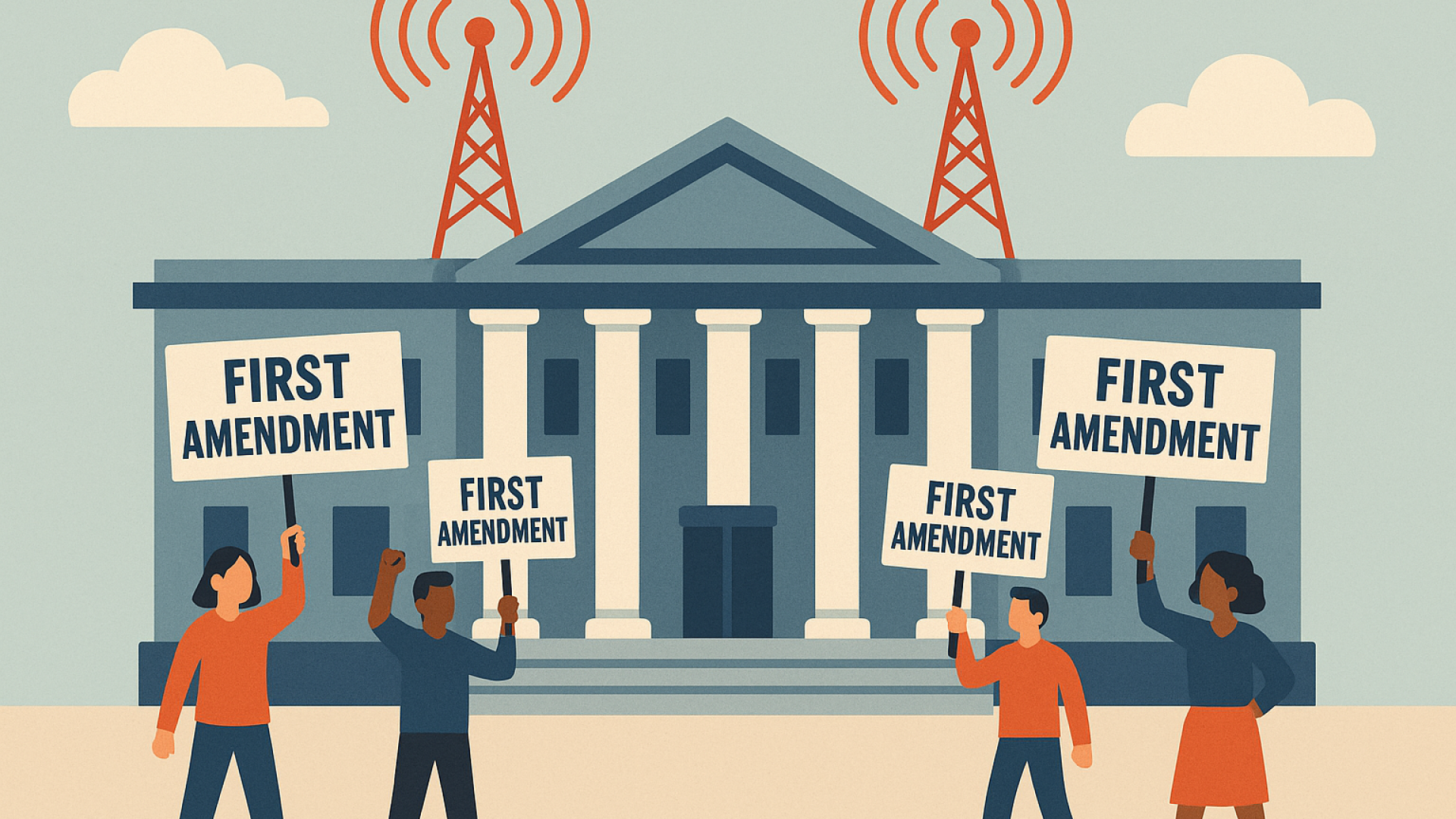
On March 16, 2026, a heated debate erupted in Washington D.C. as Democrats strongly denounced Federal Communications Commission (FCC) Chair Brendan Carr’s recent threats to revoke broadcast licenses from certain media outlets. This controversy has ignited fierce discussions about the boundaries of government authority over the press and the fundamental rights guaranteed by the U.S. Constitution. At the heart of the dispute lies the accusation that the FCC’s actions represent a direct assault on the First Amendment, which guarantees freedom of speech and freedom of the press in the United States. Critics have gone as far as to describe Chair Carr’s stance as 'totalitarian,' warning that such measures could set dangerous precedents that threaten media freedom and democratic discourse nationwide.
Context: The FCC’s Role and Recent Developments
The Federal Communications Commission is an independent government agency tasked with regulating interstate and international communications by radio, television, wire, satellite, and cable. One of its key responsibilities is to issue and renew broadcast licenses, which legally authorize media outlets to operate within the United States. These licenses are essential for broadcasters to reach audiences and disseminate information.
In recent months, Chair Brendan Carr has publicly suggested that the FCC might consider revoking licenses from broadcasters that, in his view, spread misinformation or engage in biased reporting. Carr and his supporters argue that this stance is a necessary measure to uphold journalistic integrity and protect the public from harmful falsehoods that can distort public understanding and harm societal cohesion. They contend that unchecked misinformation can undermine democratic processes and public health, citing examples such as false claims about elections or medical treatments.
However, this approach has alarmed many lawmakers, media organizations, and civil liberties advocates who argue that such actions threaten the foundational principles of free speech and press freedom enshrined in the U.S. Constitution. They warn that granting the government the power to revoke broadcast licenses based on content could lead to censorship and the suppression of dissenting voices.
The Core of the Controversy
Democrats have been particularly vocal in their opposition to Chair Carr’s proposals. They argue that the FCC Chair’s threats to revoke licenses are not only unconstitutional but also dangerously authoritarian. Representative Alexandria Ocasio-Cortez, among others, has publicly condemned the FCC’s position, stating that "using government power to silence media outlets is a slippery slope toward censorship and undermines the democratic process." She and other Democratic leaders emphasize that freedom of the press is a cornerstone of American democracy and that any attempt to curtail it must be met with strong resistance.
Legal experts have weighed in on the matter, noting that the First Amendment protects even controversial or unpopular speech. They emphasize that government agencies lack the authority to punish broadcasters for their editorial choices unless those choices violate specific laws or regulations, such as incitement to violence or obscenity. The broad and subjective nature of terms like "misinformation" and "biased reporting" makes regulatory enforcement highly problematic and prone to abuse.
Furthermore, critics warn that the FCC’s approach could be weaponized to target media outlets based on political bias, thereby eroding trust in public institutions and deepening societal divisions. They argue that such power could be exploited by future administrations to silence opposition voices, undermining the very democratic principles the FCC claims to protect.
Historical and Legal Perspectives
The debate over broadcast regulation and free speech is not new. Historically, the FCC has maintained a relatively hands-off approach to content, focusing instead on technical and operational compliance such as signal interference and licensing procedures. The landmark 1969 Supreme Court case Red Lion Broadcasting Co. v. FCC upheld the FCC’s authority to regulate broadcast content to some extent, particularly through the Fairness Doctrine, which required broadcasters to present balanced viewpoints on controversial issues. However, the Court also emphasized the importance of diverse viewpoints and free expression, recognizing the unique role of broadcast media in public discourse.
More recently, the rise of digital media and social platforms has complicated the regulatory landscape. The proliferation of online misinformation and disinformation has sparked ongoing discussions about the role of government oversight in the digital age. Unlike traditional broadcast media, digital platforms operate under different legal frameworks, raising questions about how to effectively address false information without infringing on free speech.
Legal scholars caution that any move to revoke licenses based on content could face significant judicial challenges, potentially leading to protracted court battles that test the limits of First Amendment protections. They note that the Supreme Court has consistently protected speech, even when it is offensive or misleading, unless it falls into narrowly defined exceptions.
Implications for Media and Democracy
The FCC Chair’s threats have sparked widespread concern among journalists and media organizations. Many fear that such measures could create a chilling effect, discouraging investigative reporting and critical commentary out of fear of losing broadcast privileges. This could lead to self-censorship and a reduction in the diversity of viewpoints available to the public, undermining the media’s role as a watchdog and a forum for democratic debate.
Media watchdog groups have called for transparency and clear guidelines to ensure that any regulatory actions do not infringe on constitutional rights. They emphasize the need for a balanced approach that addresses misinformation without compromising free speech. These groups advocate for solutions that empower audiences to critically evaluate information rather than relying on government censorship.
Democratic leaders have also highlighted the broader implications for democracy, warning that government interference in media could undermine public trust and weaken the checks and balances essential to a healthy political system. They argue that a free and independent press is vital for holding power accountable and informing citizens, and that any attempt to control the media threatens these democratic functions.
Potential Solutions and Path Forward
In response to the controversy, some lawmakers and advocacy groups are urging the FCC to adopt a more measured and transparent approach. They propose several potential solutions aimed at balancing the need to combat misinformation with the imperative to protect free expression and democratic values:
- Establishing Clear Criteria: Defining specific, objective standards for any regulatory actions related to broadcast content to prevent arbitrary or politically motivated decisions. This would involve transparent guidelines that clearly delineate what constitutes unacceptable conduct without infringing on editorial independence.
- Enhancing Oversight: Increasing congressional and judicial oversight of the FCC’s decisions to ensure accountability and protect constitutional rights. Oversight mechanisms could include regular reporting, public hearings, and judicial review to prevent abuse of power.
- Promoting Media Literacy: Investing in public education initiatives to help citizens critically evaluate information sources and combat misinformation without resorting to government censorship. Media literacy programs can empower individuals to discern credible information and reduce the impact of falsehoods.
- Encouraging Industry Self-Regulation: Supporting voluntary codes of conduct and ethical standards within the broadcasting industry to maintain integrity and public trust. Industry-led initiatives can foster responsible journalism and accountability without government intervention.
These approaches aim to create a framework that addresses the challenges posed by misinformation while upholding the constitutional protections that are fundamental to American democracy.
Conclusion: Navigating a Complex Landscape
The debate over FCC Chair Brendan Carr’s broadcast license threats underscores the complex challenges facing media regulation in the digital age. While combating misinformation is a legitimate and pressing concern, the methods employed must respect constitutional protections and democratic principles. Heavy-handed government actions risk undermining the very freedoms they seek to protect.
As this issue continues to unfold, it will require careful deliberation among policymakers, legal experts, media professionals, and the public to find solutions that uphold both the integrity of information and the freedoms that define American democracy. Collaborative efforts that balance regulation, education, and industry responsibility offer the most promising path forward.
Ultimately, preserving a free and independent press remains essential to ensuring an informed citizenry and a vibrant political discourse. The health of American democracy depends on protecting these freedoms while addressing the challenges posed by misinformation in a rapidly evolving media landscape.